

-
About UsShijiazhuang Xuda Safety Tools Co., LTD. which was established in 1986 , is a professional factory to produce non-spark safety tools in China. Professional technology, advanced producing equipment, scientific processing technique and perfect checking measure guarantee the best quality of xinda non-spark safety tools.

-
ProductsThere are 10 categories,more than 180 series and thousands of types of the tools, all of products are made of Aluminum bronze or beryllium copper, the products have the feature of high rigidity, good tenacity.
-
NewsXinda always sticks to the following enterprise principle:"develop by quality, treat the customers with honesty and credit".We hope that our products can provide more safety and convenience to all of the customers and we welcome all the friends at home abroad to Xinda.
-
ServiceWe can also design and produce the special type products as the customer’s requirement. Xinda always sticks to the following enterprise principle:"develop by quality, treat the customers with honesty and credit". We hope that our products can provide more safety and convenience to all of the customers.
All You Need to Know About Non-Sparking Sockets in the Explosive Tool Industry
Jul 03,2024
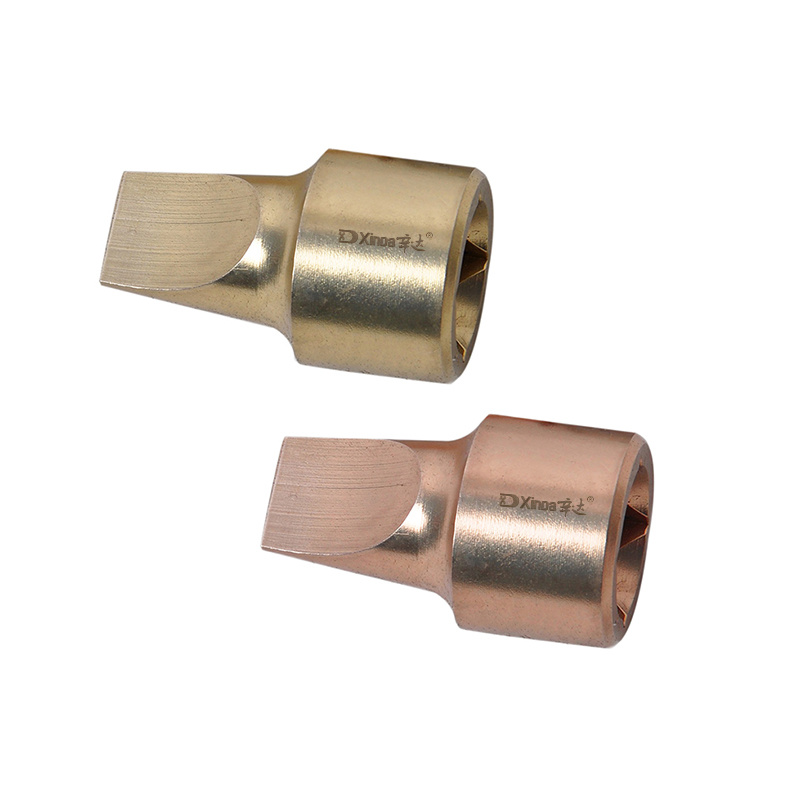
In the realm of hardware tools, particularly in the explosive tool industry, non-sparking sockets play a crucial role in ensuring safety in potentially hazardous environments. These sockets are designed to prevent the occurrence of sparks, which can be extremely dangerous when working with flammable materials or in explosive atmospheres.
Non-sparking sockets are typically made from materials such as beryllium copper or aluminum bronze, which are specifically chosen for their non-sparking properties. These materials are non-ferrous and have low friction, reducing the risk of sparks during use. In addition, non-sparking sockets are often color-coded for easy identification and come in a variety of sizes to accommodate different types of bolts and nuts.
One key advantage of using non-sparking sockets is their ability to minimize the risk of ignition in areas where explosive gases or vapors are present. By eliminating the potential for sparks, these sockets help to create a safer working environment for operators and reduce the likelihood of accidents or injuries.
It is important to note that non-sparking sockets should be used in conjunction with other explosion-proof tools and equipment to maximize safety. Regular maintenance and inspection of these tools are also essential to ensure their effectiveness and longevity.
In conclusion, non-sparking sockets are an essential component of the explosive tool industry, providing a safe and reliable solution for working in potentially dangerous environments. By understanding the importance and features of these specialized tools, operators can minimize risks and uphold high safety standards in their workplace.
TAG:
Contact Us
E-mail :
info@xdtools.com
Phone/Wechat/WhatsApp:
+86-15830107628
Address:
Xinleitou Industry, Xinji City, Shijiazhuang City, Hebei Pro.,China.


Request Quote